14/04/2021

Anarchy In The Police State

The average IQ in the UK is just 102
Although that does increase when Joey Essex goes away on holiday
(Jimmy Carr, 8 Out Of 10 Cats Does Countdown, 2014)

© John Lydon, Glen Matlock, Steve Jones, Paul Cook, 1977

What’s the point of bring intelligent? I’m not and I’ve done awright
(Joey Essex, 8 Out Of 10 Cats, 2015) 

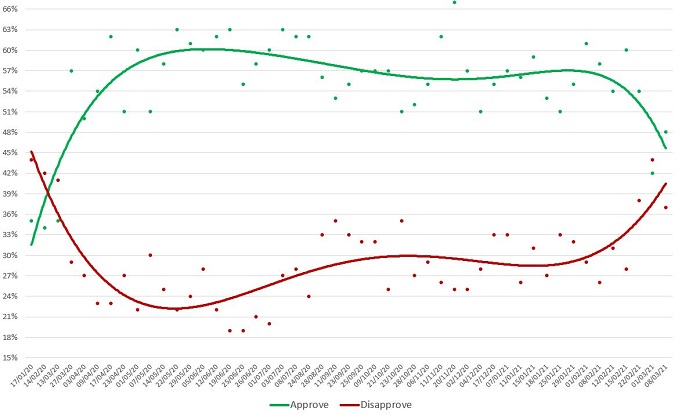
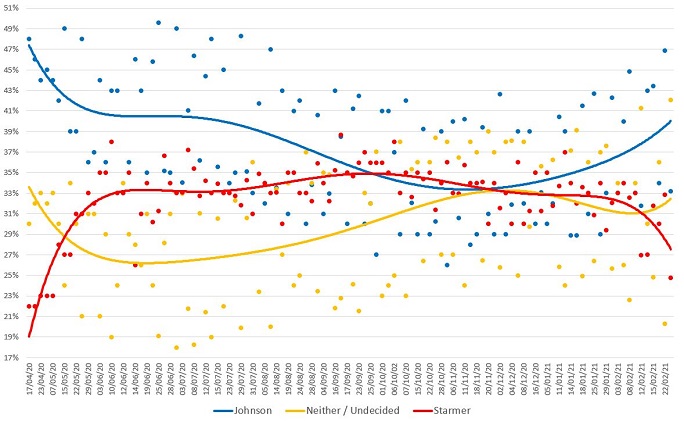
Say what you will about the First Minister of England but he's an expert at PR stunts, legerdemains and squirrels. which he has liberally used all along his career, and also welcomed those that were gifted him on a silver platter. But Oor Boris also knows when to bring down the wrecking ball on the remnants of British democracy. When there's a world beating vaccine rollout granting you record approval, though sometimes, as MacMillan warned, "the events" will come in your way and make you look less grand. Surely there's no better moment to debate the Police State Bill than the day after an out of control police mob waited until one of Royal Family Ltd. had had her photo op, and then brutally manhandled grieving women while trampling underfoot flowers brought to a peaceful vigil, or is there? But never mind. I'm quite sure there are a shitload of shitwanks Doon Sooth who will never say it aloud, but think: "They asked for it, they were breaking Covid regulations after all". Just don't mention the Covidiot March one week later that never had a copper near them because, ye ken, "they're fighting for our freedoms". And the same Leafy Southerners will agree with the Police State Bill because, ye ken, we can't have those pesky wummin, darkies and underage wokos on our streets all the time, can we? And fuck the fucking Travellers too. They should know their fucking place and just stop travelling, we don't go roaming the roads of Ireland all year round, do we? That's just common sense, innit? And only criminals have anything to fear, haven't they? And that's why Boris Johnson's ratings in the Preferred Prime Minister polling are skyrocketing to Covid Honeymoon levels, while Keir Starmer's are crashlanding.


The interesting part about the vote on the Police State Bill's second reading, and that few people may have noticed, is that the DUP sat it out. And if something is too extreme for the DUP to support, that says a lot, doesn't it? Another embarrassing point here is surely that a lot of Johnson's success has to do with overage overweight Leave voters thinking "Holy shitballs, we'll soon be back to the sunlit uplands of Benidorm where we can boak in the streets and piss on the beaches, but always in a Churchillian way, after hacking the neighbour's iPlayer to watch the reruns of 'Fawlty Towers' because there's no way we will pay the fucking licence fee to the fucking lefty woke BBC, and pretend we don't understand a word the fucking natives say, which is actually true as we could never be arsed to learn the fucking language". A proud example of true Englishness making "progress along the road to freedom", as Boris put it just after leading the UK up the garden path to submission. Of course the First Minister of England is still the same brand of mendacious plonker and finagler he was a year ago, but he's got such a herd of lumpsuckers in his wake that it doesn't affect his ratings. And getting his jag of the Oxford vaccine, with the added glee of flipping the EU bureaucrats the bird, did wonders to improve his public image well outwith the reaches of Middle England.

© Chris Riddell, The Guardian, 2021

Regional crosstabs from the most recent polls also show that the Tories are giving Labour a run for their money in the North and Midlands. One pollster has even surveyed a selected list of 45 Red-To-Blue Wall seats twice and the results are devastating for Labour. In November 2020 they found a massive swing from the Tories to Labour, predicting 36 out of 45 seats would turn red again. Then in March 2021 they found a strong swing back to the Tories, leaving Labour with no more than a handful of possible gains across the area. Obviously there is still a long way to go before La Reconquista Del Norte works. Part of that may be the old geezers who have got their two AstraZeneca jags and not died of thrombosis, or it might just be Keir Starmer misreading the Northern electorate, just as he misreads Scotland. I guess Sir Keir KCB QC would be within his comfort zone in Marchmont but probably outwith it in The Calders, though probably not as much as in Croydon. Quite surprisingly, the situation is not that good for Labour in Keir's own backyard, even with polls predicting that Sadiq Khan might well be the first Mayor of Labourgravia elected on the first round. But the parliamentary polls are far less satisfying. The Liberal Democrats have been leaking votes from both ends to the Conservatives and Greens over the last two months, which will not only cost them the usually hard-fought Richmond Park, but might also make things tricky for Labour both in the heart of the City and in some of the marginal Auld Middlesex seats. Polls of Wales are quite bad too, with YouGov's last predicting Labour and Conservatives tied on 35% and Plaid Cymru nearly doubling their share on 17%. Which means Labour could lose up to three seats and Plaid Cymru could gain two for an all-time high of six. And the general trends of general election polling just confirm all isn't going smoothly for Labour. 


You just have to wonder how Sly Keir would have fared in a normal environment. Like one where Covid never reached the White Cliffs Of Dover, and all of Johnson's record was abject cronyism and mismanagement of taxpayers' dosh. Would Keir have been just Kinnock 2.0 or already Blair 2.0? There's no doubt in my mind than Blair is his role model, but a year on from becoming Leader Of The Opposition, he's not even doing remotely as well as Kinnock. The Hartlepool by-election will be something of a litmus test but I would not hold my breath, as Labour seem to have forgotten that their core target here is Andy Capp and not Owen Jones' wee kid brother. Hartlepool is obviously a dilemma.for New New Labour spads. The one sure way to win it is to snatch more of the 2019 Brexit Party voters than the Conservatives, because there's not a lot of woko students up there, is there? But Labour pandering to Leave voters might lose a significant number to the Northern Independence Party, who challenge them from the left. From a Corbynist perspective, shall we say? The first poll of Hartlepool, though having just a weeish sample and with no background to accurately assess its reliability, definitely looks like Labour's worst nightmare: another historic heartland seat lost. Now, on the quadrinational level, the real benchmark for Sly Keir is Blair's 2005 performance, which was 356 seats. Or 316 without the Scottish seats that will never come back, and would still put Keir in the best position to form a minority government. Even better with case-by-case support from other parties that are not based in Scotland, that lovely arrangement called "confidence and supply" that James Callaghan used, though it did not end well. In that dream timeline, Starmer could be close to Blair 2.0, though he might have to content himself with being just kind of Blair 1.5. But in the real world, you now have the social-liberal Guardian joking that Keir could be no better than José Mourinho 2.0. Holy shitballs, that hurt.

I don’t like people who buy council houses and put them lions up
(Johnny Vegas, 8 Out Of 10 Cats Does Countdown, 2015)

© John Lydon, Simon Ritchie, Steve Jones, Paul Cook, 1977

You’ve got to reach for the stars, and you might just touch up a cloud
(Jon Richardson, 8 Out Of 10 Cats Does Countdown, 2015)

The impact of Sly Keir's ratings on Labour's electoral performance is also made painfully obvious by YouGov's latest "Leaders' favourability" poll, which they mercilessly dubbed "Keir Starmer Performance poll". Starmer scores a dismally dire -11% net rating with the general population and a smallish +26% with Labour voters. While Boris Johnson scores -1% with the general population and +64% with Conservative voters. More worrying when facing a possible snap election that nobody except himself has mentioned, is that Keir is less popular than Boris all over England except in London. And even in London, Keir scores just a measly +1%, while Boris scores a more satisfying +12% in the Leafy Blue South. Keir's only consolation could be that he is more popular than Boris in Scotland, inasmuch as a net -9% is actually better than -44%. And it certainly won't help Labour in any election North Of The Wall, when the same poll has Nicola Sturgeon scoring a net +17% with Scottish voters. But of course England is much more of a problem for Labour than Scotland, as current polling shows they still haven't fully recovered Doon Sooth. The aggregate predictions for the three English meta-regions, factoring in the regional crosstabs published by the various pollsters, also show that Labour has recovered more significantly in the South than in the North and Midlands, and quite suprisingly even beyond their 2017 result. One of challenges for Labour is that the Reform UK vote, or Brexit Party as it used to be known, has not fallen as sharply in the North as in other regions. And what little they have lost seems to have migrated fully to the Conservatives. And this is exactly the pattern that spells doom for Labour in Hartlepool.


My current Poll'O'Polls shows how far from an electoral victory Labour are. It's made up of just the last three polls, conducted between 8 and 12 April. Super-sample size is 5,614 with a theoretical margin of error of 1.3%. With Labour 8% behind GB-wide, it's the worst prediction since the days of Johnson's Pandemic Honeymoon eleven months ago. Which was cut short by Dominic Cummings' infamous trip to Barnard Castle. But nothing similar is looming on the horizon right now, with national mourning and all the sycophantic media banter around it providing adequate cover-up for the most embarrassing news. Right now the weighted average says the Conservatives are roughly on the same vote share as in 2019, as these are GB-wide polls that must be compared to the GB-wide results, not the UK-wide ones, with Labour only 3.3% up. This places the Conservatives in a slightly better position than in 2015, the last general election that was held at the scheduled date. We also have the Liberal Democrats massively underperforming on their 2019 result, that had been kind of a wee comeback after being punished for the Coalition twice in 2015 and 2017. But now they're predicted to do worse than at both these elections. Which is not good news for Labour as the lost LibDem voters have switched to the Conservatives in Wales, but also to the Greens and various minor parties and independents in most of England. And Sly Keir has yet to find a convincing way to lure some of them to Labour. This looks like just another iteration of the already seen paradox of some English LibDems fancying themselves more progressive than Labour and changing their vote accordingly, no matter how much of born-again Blairites New New Labour want to rebrand themselves.


I expect some lull in polling for the rest of the week, as all headlines for the duration of the mandatory national mourning have already been reserved for celebrations of Philip Mountbatten on a loop, except The Guardian who are not necessarily the most effective of Starmer's supporters. I guess this will be serendipitously good news for Team Bozo, as outbursts of English nationalism and rallying around the Crown rarely benefit the left. Unless of course being force-fed young Phil, old Phil and cold Phil by the BBC and ITV sorely backfires, but so far it has backfired only against the broadcasters, not the English government that orchestrated it all. Then I can easily picture the swarm of spads in the basement at Conservative HQ, coming up with the best ways of making political gains out of Phil's death. Without even having to actually campaign, as pandering to the deep-running currents of cap-doffing English exceptionalism will obviously be more awkward for Labour, no matter how hard they try, and Keir might be a wee smitch clumsy at handling the pump and circumstance. Just witness the reactions to his comments about "faith in the monarchy" and "the people's love for Prince Philip". Alleged, that is. And now there's a pile on against Keir, with even Wee Owen Jones doing his best to prove David Tennant right, when he commented on "Have I Got News For You" that Sly Keir "successfully brought the party together in thinking that he's not doing a very good job". Holy shitballs, that hurt again. Or not, if you consider it's just Backstabbing Wokowen channeling his inner backstabber again, after performing the same stunt on Jeremy Corbyn. Which does not mean that Keir should feel better about it, does it?

You don’t bury hatchets... only in someone’s head
(Jon Richardson, 8 Out Of 10 Cats Does Countdown, 2015)

© John Lydon, Glen Matlock, Steve Jones, Paul Cook, 1977

Faith is nourishment, but only porridge has slow-release carbohydrates
(Jon Richardson, 8 Out Of 10 Cats Does Countdown, 2015)

As you might expect, the seat projection from the most recent batch of polls is quite dismally dire for Labour. Here I used the patterns of my Poll'O'Polls only for the English seats outside London. We also have recent polls of London, Wales and Scotland which I used to fill in the blanks. So the overall picture is a wee smitch different from what you would get from a simulation on uniform national swing using the Poll'O'Polls' weighted averages. But not by much, and the current projection from Electoral Calculus is actually pretty much the same, give or take a couple. In case you wonder, the two 'Others' here would be an environmentalist independent in East Devon and the Ashfield Independents in Ashfield, Nottinghamshire. The latter walk and quack like closet LibDems, but have actually attracted a large swath of former Labour voters at the 2019 election, turning it into a massive double-whammy humiliation for Labour. Not only did they lose the seat, that they had held since 1918 in two successive incarnations, except for a brief period in 1977-1979 after a by-election. But they also ended up third after losing almost 10k votes to the Ashfield Independents. And the next election could also bring some more upsetting results for Labour, as the projection looks definitely 2015ish, not really what Labour should be aiming for these days. This result would in fact be better for the Conservatives than 2015. After that election, David Cameron and then Theresa May had a 15-seat working majority. The current projection means that Boris Johnson would start his second term with a 35-seat majority. All he has to do then is stay put for five years and avoid another snap election, as those can deliver unpredictable results that even John Curtice wouldn't foresee.


The main point here is that the seat projections in the three meta-regions of England confirm what the predicted vote shares imply. Labour are still not back up to their 2017 results in the North and Midlands, and even further from the 2005 benchmark results that would propel Not-So-Hardy Keir to Number Ten. There are strong hints that the Red-To-Blue-Back-To-Red patterns Labour expected in the North have actually turned out to be more like Red-To-Turquoise-To-Blue, with the Brexit Party vote providing an oven-ready decompression chamber to the Tory vote. And Labour being halfway to their 2017 result in the Midlands can't hide the sobering fact that the Conservatives still bag an outright majority of the popular vote there. But of course the biggest sensation here is Labour's result in the South, where they would not just surpass their 2017 result, but be halfway to their 2005 result. This thanks to regional crosstabs predicting a 6% swing from the Conservatives to Labour there, three times the GB-wide average. The most likely explanation is a significant change in demographics, which YouGov already foresaw in 2018. It certainly helped already at the 2019 election, when Labour's decline had far less impact in the South than in the other regions on their number of seats. There is also circumstantial evidence of this in the projection saying that half of Labour's gains in the South, or a quarter of their gains in England, would be in the South East, the region closest to London. Since then, it has certainly been accelerated by the effects of the First Great Lockdown, especially working from home making living close to work far less attractive, and housing costs within London. Labour would thusly gain 14 seats all over the Leafy South, half their overall gains in England, with some big fish going down: Robert Buckland, Alok Sharma, Chloe Smith and Brexiteer Covidiot-In-Chief Steve Baker. This last one is probably the most remarkable as Baker currently represents Wycombe, an historic seat that has existed since the Model Parliament of 1295, and has been previously held by Labour for only six years in 1945-1951. Two of the other predicted gains (Filton and Bradley Stoke, Truro and Falmouth) exist only since 2010, have never been held by Labour, and don't even have an exact predecessor seat that was ever held by Labour.


Labour would be on more familiar territory in their eleven other Southern gains, all of which they held during most or all of the Blair years, and lost in 2005 or 2010, with only Southampton Itchen remaining in their hands until 2015. Three of these eleven (Ipswich, Peterborough, Stroud) also turned red again briefly between 2017 and 2019. So I definitely think we should have a closer look at the South, and especially the South East, when the next batch of polls are delivered. To try and guess if the major road to Labour's recovery isn't down there rather than in the historic heartlands, which would be quite a turning point in English electoral history. Then on 7 May this year, the eyes of the punditariat will not be trained on the English Councils and probably not even on Scotland, mostly because the results won't be there already, which probably won't prevent some from commenting on them anyway. But the focal point will be Hartlepool, where the by-election will obviously be scrutinised and dissected from all possible angles. Labour HQ belatedly casting doubt on the one poll we have so far does not make it more or less valid. But prevailing trends both GB-wide and specifically in the North East lend some credibility to it. And Labour HQ are obviously worried enough to send a flock of big guns there, though that might not be the miracle cure they hope it can be. The only certainty is that, whatever happens there on 6 May, the media will make a national event of it. They probably already have two versions of their post-mortem: one explaining why losing the seat is a personal disaster for Keir Starmer, and one explaining why holding it is a massive success for the local party. Never mind the bollocks. And before we move back to Scotland for my next article, let's enjoy again David Tennant's Saltire Moment on "Have I Got News For You", joyfully giving all obsessive EngNat flagshaggers the finger. Be seeing you soon. 

Don’t confuse us with the American Dream, this is the UK
You work hard here, but you don’t prosper
(Peter Boyd, Waking The Dead: Pieta, 2008)

© James Osterberg, David Alexander, Scott Asheton, Ron Asheton, 1969

14/03/2021

Cutting The Branch

I feel a bit like we're being sort of an abusive boyfriend.
Going: you can't leave us. You leave us, you've got nothing, love.

(Jimmy Carr on Scottish Independence, 8 Out Of 10 Cats, 2014)

© Peter Gabriel, Youssou N'Dour, 1989

We’ve been together with Scotland for 300 years
If we broke up, it’s like your nanna and grandad breaking up
What’s the point? Just shuffle along towards the end
(Jimmy Carr, 8 Out Of 10 Cats, 2014)

Before we move to the heart of the matter and look at the latest batch of Scottish polls, let's examine first what should have remained a side issue, but has been turned into a key issue by some both within and outwith the SNP, usually with extremely conflicting views. You surely know already what I'm referring to here: gender politics, or identity politics, just use the description you like best. And of course its proposed legal consequential: reform of the Gender Recognition Act 2004 including unsupervised and unchallenged gender self-identification. You already know where I stand here and this is definitely not about my own opinion, but where Scottish public opinion stands. To the best of my knowledge, support and opposition to the SNP's GRA reform has been surveyed twice so far. First in October 2019 by Panelbase on behalf of Bathman... oops... sorry... Wings Over Scotland, and the wording of the question can be described as strongly biased to elicit the strongest opposition. Then in February this year by Savanta Comres as part as their Scottish Tracker for The Scotsman, with a wording you might consider halfway between neutral and biased towards supporting the reform. In both cases, my hunch is that the explicit or implicit bias failed to have a massive effect and probably just boosted the 'neutral' tier of the answers. Both polls explicitly mentioned access to single-sex spaces, which is one of the key issues for opponents of the reform, and probably the most sensitive for the general population. But it has been at the core of feminist opposition right from the start and triggered the most passionate reactions, so I doubt even painting it in the most negative way would seriously influence the outcome, simply because most people already feel strongly about it one way or the other. So now bear with me for a moment as I score a massive own goal with those results. First the headline results from the general population, crosstabbed with the usual basic demographics.


Savanta Comres used a straightforward five-tier scale from 'strongly oppose' to 'strongly support'. Panelbase used a 0-10 scale which I mapped as: 0-1 = strongly oppose, 2-3 = somewhat oppose, 4-5-6 = neutral, 7-8 = somewhat support, 9-10 = strongly support. And here you have it: support for the GRA reform has increased during the sixteen months between the two polls. Most noticeably among the Zoomers and Millennials, which comes as a surprise only if you haven't been paying attention, or stayed off social media since Tony Blair resigned. And I honestly don't feel even a wee smitch bad for being at odds with the majority of my own generation. More surprisingly, support has also increased faster than average among women. I guess you can pin that one on the younger lasses who have only an approximate knowledge of what the fight for women's rights was all about. And, before you even think of saying it, this is not a sexist remark. Just stating the obvious fact that sometimes people take some situations for granted, and fail to identify what might be a threat to hard-earned rights. Like a Deliveroo biker agreeing to be labelled 'self-employed' and then whining he can't get union protection when they deny him sick pay. Which is definitely the kind of sentence that makes me sound like an old fart, but never mind. More relevantly, Savanta Comres crosstabbed the question with political affiliation, based on votes at the December 2019 general election.


So SNP voters massively support GRA reform and self-id, significantly more than any other political tribe in Scotland. Though 'Other' here includes anything from UKIP to Green voters, and you would probably find a similar level of support, if not higher, if Green voters were counted separately. Also note that the quadrant of the political compass from which the SNP are most likely to draw extra voters, if any, the Labour electorate, is also highly supportive of GRA and self-id. And, though we lack crosstabs on that, the part of the Labour electorate most likely to switch to the SNP, young pro-Indy Labour voters, are certainly more supportive than the average Labour voter. And quite likely more supportive than the average SNP voter too, if we infer that from the basic demographic crosstabs of the general population. It definitely sounds like a lot of people are totally ignoring the SNP's antics on this issue, no matter where they may lead, and have totally bought the soundbite that we must "keep our eyes on the prize". That is Independence, which might not be such a sure prospect as we wanted to think it was six months ago, but we'll have more on that later. So, if gender politics are not a vote killer and might even be a vote gainer, we have to look elsewhere for an explanation of the SNP's current woes. And we all know where to look, don't we? If there's a lesson to be learned from the ongoing farce, it's that those who told us to suck it up and wheesht for Indy should have applied that to themselves first. And not waited for a Panelbase poll that says 29% of Scots are less likely to vote for the SNP now, and only 14% are more likely. It's too late to say 'Oops!' now, because you just realised that all this time you've been cutting the branch you're sitting on. Be seeing you after the election, lads.

Scottish Independence was a big story
Part of me thought it would be a tremendous idea
Telling my kids that we’re going abroad and then taking them to Dunfermline
(Sean Lock, 8 Out Of 10 Cats, 2014)

© Peter Gabriel, 1992

The only person who stood their ground the entire time was Nicola Sturgeon
She’s amazing. She came out in Parliament and she said:
“I’m not going to go back on what I said because some think it was awful at the time”
“And that wouldn’t be the sort of person I am”
That’s what we need in this country: a good Scottish woman
(Aisling Bea on the EU referendum, 8 Out Of 10 Cats, 2016)

Another key factor in the election will be Nicola Sturgeon's own favourability ratings, because you can't escape the quasi-presidential component of parliamentary elections under the Westminster System which, like it or not, is the template for the governance of Scotland. A lot hinges on how much you trust the winning party's leader and, in Nicola's case, you might say how much faith you have in her. Because, like it or not again, there is a cult element about her. Which is not an isolated case, there is one about Boris Johnson too, there was one about Donald Trump, Jeremy Corbyn, Tony Blair and Alex Salmond too before that. Just to make it clear, I definitely do not mean that in a derogatory sense, just as an acknowledgment of a pretty common phenomenon in highly personalised politics. And in that respect, Nicola Sturgeon has succeeded way beyond what anyone possibly thought possible when she became First Minister in 2014. Two major pollsters, Opinium and Redfield & Wilton, have surveyed Nicola's ratings continuously since the beginning of 2020. Both phrase the question as approving or disapproving of her performance in her job, which obviously strongly reduces the 'beauty contest' bias you always have in that sort of survey. And the overall result is quite stunning.


To cut the long story short, Nicola Sturgeon has a higher level of approval among British public opinion than the leaders of the three main English parties. Better than Boris Johnson, Keir Starmer or Ed Davey. She's even the only one of the four major leaders with a net positive rating continuously from late March 2020 to early March 2021. Just bear in mind these figures include Welsh and British voters, so you can't rule out some ambiguity in what 'approve' actually means for them. Maybe some approve her for fumbling the case for Independence, and why wouldn't they? Then what matters more is what Scots think of Nicola's performance, which has to be a mix of her as First Minister and her as leader of the SNP. And it's really good too, except for an unexpected twist at the end. In Redfield & Wilton's first March poll, Nicola got a net -2% in Scotland, her first net negative since the beginning of the Covid crisis, while she still enjoyed a net +4% overall. So, for one fleeting moment, she was more popular in England than in Scotland. Don't ask me why, it's all in the numbers and numbers don't lie, do they? That is, until they do. And anyway Nicola was back to a net +11% in Scotland in the second March poll, which is definitely not as spectacular as in the past, while dipping to +2% overall. Which is her worst result with the general UK population since April 2020. Not that I want to pour salt and vinegar in the wounds, but Nicola's popularity has definitely suffered some serious blows in the last two or three weeks, as the trends of her assessment by Scottish voters show.


Nicola rose to world-beating levels of approval roughly when the Covid crisis became an everyday reality and the First Great Lockdown started. She then enjoyed the same kind of Pandemic Honeymoon as Boris Johnson, with both peaking at a net positive of 44%, GB-wide for him and in Scotland for her. But all good things must end someday, and it has happened to Nicola while Boris saw a slight improvement in England recently. Boris's rating dropped sharply, as did the Conservatives' voting intentions, after Dominic Cummings's Trip To Durham, and his inconsistencies in dealing with the pandemic hurt him for many months until the vaccine rollout saved his ass. Nicola did not face the same challenges as the only remotely comparable situation, that involving Catherine Calderwood, was dealt with swiftly and decisively, and thusly quickly vanished from the front pages. For a long period Nicola enjoyed a strong net positive with Scottish voters, in the high 30s to mid 40s. It then fell to mid to high 20s after the summer break last year, probably a result of Covid fatigue and not seeing the light at the end of the tunnel to the sunlit uplands. Paradoxically, Nicola often had a higher net positive in the rest of the UK than in Scotland during that period. And the vaccine rollout, which was eventually as successful in Scotland as in England, an even a wee smitch better according to official statistics, did not see here skyrocket to higher levels of approval. Obviously other events had an effect here, from the SNP's infighting to the handling of the Holyrood investigation into the Alex Salmond case. There are also some hints of discontent among SNP voters, even if the overall trend remains spectacularly stellar over most of the last fifteen months.


That last item is probably what Nicola should be fashed about most these days. For an extraordinary length of time, there has been nobody disapproving of Nicola in the party's ranks, just a wee smitch of 'neutral'. And when there was a wee hint of disapproval, it was probably just Kenny MacAskill having a bad day. So we had statistical evidence of what Unionists and disgruntled Yessers called The Cult. But these milk-and-honey days are over for Nicola. Her support among SNP voters dropped by an amazing 19% in the first two March polls, from a net +88% to 'only' +69%. And we're talking about a leader whose net approval rating varied from +65% to +99% over the last fifteen months, so we're definitely at the lower end of the spectrum here. If any English party leader had seen his popularity with his own voters drop in such a way, he would be out on the street in his Union Jack shorts begging for his bus fare home, while the party would be busy anointing the next disposable Chosen One. It can't happen in Scotland, we Scots are more civilised, and did invent The Modern Civilisation As We Know It, did we not? Anyway it's quite obvious Nicola will not be impeached, as the Greens will be available to vote down any motion of no confidence. But she should definitely sit back and reflect about the true reasons why her net positive among SNP voters is now 30% lower than at its peak last year. And she definitely can't expect to make up for this with the Green voters, who are mostly neutral about the way she handles her job, whatever level of support their party is likely to offer in their unmistakeably opportunistic way. Just wait and see what the next approval polls have to say. 

Every time Nicola Sturgeon speaks, it’s amazing
I feel like she’s on the top of a hill with all kilt and no knickers
Just going “you can take the piss, you can grab our pussies”
“But you’ll never take our freedom”
(Aisling Bea, 8 Out Of 10 Cats, 2016)

© Peter Gabriel, 1992

The weird thing in the Scottish referendum was they went for a "yes or no" vote
Instead of an "aye or git tae fuck, ya schemey bampot prick" vote
(Jimmy Carr, 8 Out Of 10 Cats, 2014)

So let's see first what has happened on the IndyRef2 front. Remember that, only two weeks ago, we were basking in the glory of 23 successive polls predicting a Yes victory, with just one showing a minuscule No lead. Just let that sink in: TWENTY FUCKING THREE against ONE. I would have taken those odds any day on any issue. Then it all went tits up. Forget the fake poll in The Scotsman, which they readily admitted did not comply with British Polling Council guidelines and thusly was basically crap. But they ran it anyway as it made for cheap click bait fitting the Unionist 'SNP fail' narrative. Shame on them. Unsurprisingly this poll has since been discarded by all serious aggregators. But it's still up there on Wikipedia, with only a minimal footnote warning unsuspecting casual readers that it's just crap. Then we also have had four real polls showing a steep decline in Yes voting intentions, even if the No lead remains within the margin of error in all cases. Bur even this can't hide the basic fact that we reached of peak 58% for Yes not so long ago, and that we're far from this now. And the trendlines of Independence voting intentions definitely look quite depressing.


This month's snapshot, based on the last four polls, definitely paints a doom-and-gloomy picture. Make fun of Ruth Davidson recycling her 2016 jibe that we are 'past peak Nat' all you want, but there's some somber warning in it as the Yes vote definitely went downhill throughout 2017, and certainly more significantly than Baroness Davidson ever anticipated. And you could squarely pin the blame for this on the SNP and the totally unprofessional way in which they conducted the 2017 general election campaign. I remember the Scottish Leaders' Debate ahead of that election and how Ruth Davidson attacked Independence with all guns blazing in the first 20 seconds of her opening statement. And how Nicola Sturgeon did not even mention the word itself until 26 minutes into the debate, while letting herself be cornered into answering questions about reserved matters that were totally irrelevant to a general election. Just to remind everyone that Nicola is not always a brilliant campaigner. Of course you may argue that we now start from a better position than in 2012 just after the Edinburgh Agreement. Surely trailing by 2% is better than trailing by 30%, and we know how the actual campaign cut the No lead by two thirds. But just look back at the Independence polls after the 2017 election, and how the No vote rose to a double digit lead for most of the end of 2017 and all along 2018. We did not see a Yes majority again until August 2019 and it was just a one-off. The tide turned for good only in June 2020 and now it's turned the other way again. So the current snapshot might just be a warning that things can only get worse before they get better.


Don't be naive, or misled by some interpretations of what is going on, or not, within the English Government. Now is the time for them to 'allow' a second Independence referendum. Not because it would be democratically impossible to refuse it, as the mantra goes, but because odds are they would win it. That's what I call their 'Québec strategy'. Then they could tell us "You've just had your second 'once in a generation' opportunity and you fucked it up again. So now it's 'once in a lifetime'. Be seeing you in 2100". They could even play their hand more mischievously, by imposing a three-way question including the Devo Max option, that only a minority of Scots support. But it would snatch a few percentage points off the Yes vote, allowing oven-ready PR about how a majority of Scots favour the Precious Union in one incarnation or the other. Just consider there is something fishy happening out there when even Tory dinosaur Jacob Rees-Mogg floats the idea that the English Government can't oppose IndyRef2 forever.  And even if the next batch of polls are more favourable, we should never underestimate the SNP's proven uncanny ability to totally fuck it up even when dealt the best of hands. Snatching defeat from the jaws of victory is something we have seen before, haven't we?

One of the things I like about it is they’d have to change the Union Jack
They’d have to get a new flag for England, Wales and Northern Ireland
And I suggest a frog on a motorbike
(Sean Lock, 8 Out Of 10 Cats, 2014)

© Peter Gabriel, 2002

I had a brief nap during Election Night and the man I was staying with woke me up
And he was in tears because Jim Murphy had lost his seat
(Jon Richardson, 8 Out Of 10 Cats, 2015)

We have also had a poll of Scottish voting intentions for the next general election earlier this month, from the usually reliable YouGov. But I have my doubts about this specific poll because its regional crosstabs show an almost even distribution of votes for all parties across all regions. It totally contradicts not just the findings of all previous polls that publish regional crosstabs, but also the reality of the subnational voting patterns in all elections over the last 10 years. Even when injecting the over and under-performances from YouGov's poll into my model, the result of the projection is still counter-intuitively closer than expected to an uniform swing projection you can get from Electoral Calculus or Election Polling. It actually protects Conservative seats in the North East while leaving their Border seats in the danger zone, quite the opposite of what we usually get. It would even project Labour gaining back Coatbridge, Chryston and Bellshill because of a rather implausibly high over-performance, 16% above their national average, in Central Scotland. It's quite clear from other polls that Kirkcaldy and Cowdenbeath or East Lothian would be much likelier Labour gains on a bad day for the SNP, especially as sitting MPs Neale Hanvey and Kenny MacAskill are not part of SNP HQ's Ninth Circle and could face either attempts at deselection from the gendercultist clique, or minimal tepid support from the party's election machine.


There are other counter-intuitive results when using YouGov's regional crosstabs here. The Conservatives would be within shouting distance of gaining back Gordon, and Labour would have decent odds in two more Central seats: Airdrie and Shotts, Motherwell and Wishaw. Which does sound implausible, but that is what the numbers say. And numbers never lie, or do they? Now some of my readers might still think Westminster polls are irrelevant because Scotland will be independent by the time of the next general election. Provided first there is no snap election, and I wouldn't wager even a fiver on that. Then just remember the 2014 timetable: actual independence only 18 months after a successful referendum, meaning the next one would have to take place in November 2022 at the latest. And I don't see that actually happening, even if further IndyRef2 polling showing a 'No' lead would be the perfect background for a massive gamble by the English Government. It would also require the Scottish Government strongly pushing for it, which I also consider an unlikely occurrence for a variety of reasons. One of which being that some sitting SNP MPs do enjoy the snug job and salary, and need some more years to accrue a 'decent' pension. Hasta la dolce vita, Baby!

North Korea said that would be good if Scotland go independent
And that they’ll back them, which is worrying, innit?
It’s like Oscar Pistorius telling you to be more impulsive
(Rob Beckett, 8 Out Of 10 Cats, 2014)

© Peter Gabriel, 1977

The divorce analogy is still going on though, cos it is….
It’s the couple who decided to stay together at the last minute and now they hate each other
The next morning: “No, we’re not better together”
And that’s the funny thing that’s going on in Scotland now
Cos there’s lots of Labour voters going over to the SNP
And it kind of feels inevitable that it will happen at some point in time
(Krishnan Guru-Murthy, 8 Out Of 10 Cats, 2014)

And now on to the pièce de résistance, the Scottish Parliament polls. We've had three of them this month. One each from Panelbase, YouGov and Savanta Comres. Before I dissect them any further, remember we're just under two months away from the election, and the SNP have indulged in a totally reinvented exercise in internal democracy. Which was clearly one step beyond the Leninist democratic centralism we have come to know and love under Nicola Sturgeon. This time was more like elections in China: vote till you boak but your betters have already chosen the winner, as a comparison between the real results of the list selections and the official lists of candidates show. Not sure this will help the "Both Votes SNP" message getting through, quite sure of the opposite effect actually. Back to our recent polls, Panelbase still don't offer regional crosstabs, which means you start with votes for all parties evenly spread across all regions. And YouGov's crosstabs are, just like their Commons poll, suspiciously close to an even distribution too. So even my reworked algorithms (more on this below in the closing section) deliver something quite close to an uniform swing projection in both cases. Then the Savanta Comres poll shows under and over-performances that look exaggerated in some cases, but that's what the correction mechanisms in my algorithms are here for (again, more on that later). Below is what my model makes of these three polls individually. Just notice that the YouGov poll is clearly off the trend shown by the other two, and even its headline voting intentions might be something of an outlier.


Now you can be delusional, or bask in wishful thinking, whichever you like best, and even some SNP MPs are not immune to that. All you have to do is make a fuss about the YouGov poll and say "Look at this one and how good it is", and totally pretend the other two polls just don't exist. Or you can do a reality check and realise all the reasons why the YouGov poll, just like its Westminster polling companion, walks and quacks like a flawed outlier. There's another option, just for Unionists, that is to loudly claim the Savanta Comres Scottish Tracker is the only one that matters because it's the most recent one. But we all know that, if there's a truth out there, which you are welcome to disagree with, it must be somewhere in between these confusing results. So just have a look at what the weighted average of the three polls says about voting intentions, and what my model makes of that. Which is again quite close to uniform swing as larger samples tend to iron out the outliers, and even more so when two thirds of your source material is already quite close to uniform swing. You might want to think it's not that bad as we still have a majority of seats for the SNP. Only the very last poll does not, and the weighted average is three seats down on the "Peak SNP" we had in mid-February. It's even six seats down if you consider the uniform swing projections instead. So nothing to write home about, and we can all hope this will be a wake-up alarm bell for SNP HQ, and they won't put it on snooze. They will soon be able at last to campaign full time when Holyrood goes into recess, and focus on the election instead of indulging in unnecessary distractions. Fingers crossed, then. 


Notice we have two polls now predicting one or two independent MSP, even if the weighted average erases them. The most likely one might be Andy Wightman in Highlands and Islands, and the runner-up Martin Keatings in Mid-Scotland and Fife. Or not, as the alt-Yes vote will probably be split between several lists who will bag an impressive 117 votes each. Alt-Yessers have inherited these so appallingly Scottish traits of being both tribal and feral, which is one sure recipe to achieve fuck all. If they just sat back and took a deep breath, they would realise the obvious: their only chance at bagging a couple of seats is to unite all under one banner and stand as joint lists in every region. Thusly they would have a remote chance at propelling both Andy Wightman and Martin Keatings to Holyrood and be a thorn in the SNP's arse for the next five years. But unfortunately for them, many of this lot have been potty-trained in politics as SNP or Labour members, and all they remember from these days is how to fuck up a golden opportunity. Something in which both parties have proven expertise. Then it is not outwith the realm of plausibility that enough potential SNP voters will find the alt-Yessers better value for votes than the Greens and allow them to sneak in through the back door. Stranger things have happened, and at least Martin Keatings deserves it, in acknowledgment of the excellent work he has done with the People's Action On Section 30. Then maybe Andy Wightman does not really deserve another term after all, for having been the SNP's useful idiot during Holyrood's Salmond inquiry. Just saying.

Better Together is a terrible slogan for the break-up of a marriage, innit?
It’s like sleeping in separate beds but you’re just doing it for the kids
(Rob Beckett, 8 Out Of 10 Cats, 2014)

© Peter Gabriel, 2002

It was like 300 years we’ve sort of been together with Scotland
And that’s going to be a big breakup, innit?
Imagine, like, sorting the DVDs out
I’ve only been married two weeks and the DVD situation is well out of hand
(Rob Beckett, 8 Out Of 10 Cats, 2014)

Now bear with me for a wee while as I update you on the fine tuning of my model. I told you last time I had revamped it to inject the over and under-performances shown by the regional crosstabs. Then I had a bad feeling about the results and sought a second opinion. Mine, actually. Until that lightbulb moment when I realised injecting the raw overs and unders from current polls was a double whammy as you already have overs and unders in the 2016 results, and that was like counting them twice. And the right approach was not to inject the current overs and unders in the model, but just the difference between today's overs and unders and those that were already there in 2016. Let's say current polling shows the SNP overperforming by 4% and Labour by 6% in Glasgow, and you think it's fine. But both overperformed there by 6% in 2016, so it's actually a wee swing from the SNP to Labour. Which does not matter in Glasgow as the SNP are so far ahead in all constituencies that it would take much more than this for Labour to gain back any. The flaw in the original reengineering was more visible in the South. Let's say today's poll says the SNP are underperforming by 7% and the Conservatives overperforming by 12% Doon In Doon. And that spells doom as it would swing a couple of seats to the Tories. But the SNP already underperformed by 6% and the Conservatives overperformed by 11% there in 2016. So today's poll is more like "no real change" and says no seats would change hands. So I altered all the formulas to inject only the differences between today's overs and unders and 2016's, instead of the raw values, and replayed all the polls conducted in 2021 accordingly, so here's what we get now.


The results are less shockingly bad for the SNP than they were, or could have been, in the early not-too-well-ironed version. But they remain slightly less favourable than what you get from a projection on uniform national swing. Which you can do yourself using the Scottish Parliament Swingometer page on the Electoral Polling site. Or you can rely on Ballot Box Scotland, who have their own methodology, which is neither mine nor full reliance on uniform national swing. Just bear in mind the values may differ but the trends won't, as everybody relies on the exact same pool of polls. My approach may amplify the warning signs from unfavourable polls, but that doesn't mean the warning signs aren't there. Just as being paranoid does not mean there's nobody out there to get you. So there's little comfort to be gained from the uniform swing projections, as they too reflect the recent decline in the SNP's voting intentions. And any method would also reflect the impact of better polls, which we all can only hope will happen as SNP HQ up their game, preferably in time for the election to not be a massive setback.


Whatever colour your glasses are, you can't escape the conclusion that something is going fucking wrong here. Especially if you agree with my diagnosis that the last YouGov poll walks and quacks like an outlier, so that the Panelbase and Savanta Comres polls might definitely be closer to the harsh truth. So 'tis is the time of the year when we reach that point where the Twittersphere goes Mount Etna with finger-pointing. I won't play the blame game here or plead both-sidesism, that's not what I do. Let's just say that one of the sides in the SNP bar brawl had much more leverage on shaping the narrative and public opinion's reactions, and totally fucked it up. Not naming names, but you know who you are. And if you don't, you're dafter than I thought. Let's just hope it won't end up with us proving that the chindi have taken over, and we really deserve to be colonised by wankers and ruled by effete arseholes. The saddest part here is that the election might be decided in the very last couple of days by something of a coin toss. Will enough people just say "fuck it, I've had enough of the SNP's dunderwhelps fucking it up as they go" to make 2017 look like a good year in comparison? Or will Douglas Ross prove enough of a jobbernowl to rally the Yesser troops around the Saltire and propel the SNP past the magic 65? Your guess is as good as mine.

The biggest missed opportunity was for England
Because there was a point during the campaigning
When Cameron, Clegg, Farage and Miliband were all in Scotland
Which was our opportunity for a snap election on independence
Put an armed guard up at the border and keep the pricks up there for a while
You can have them now, you deal with them for a bit
(Jon Richardson, 8 Out Of 10 Cats, 2014)

© Peter Gabriel, 1986

01/03/2021

House Of Confusion

We’re a nation that’s gone so far up its own arse it can’t move from the crap everywhere
(Peter Boyd, Waking The Dead: Anger Management, 2004)

© Tony Banks, Phil Collins, Michael Rutherford, 1986

You can’t understand the picture if you’re inside the frame
(Peter Boyd, Waking The Dead: Final Cut, 2003)

There is an interesting paradox in current voting trends, and one that is quite counter-intuitive even for me. It might well prove easier for Labour to form a government in a hung Parliament than for the Conservatives. Bear in mind that, whatever the exact voting intentions and with Sinn Féin excluded for the usual reason, there will always be a bloc of 80-85 MPs who would be neither Labour nor Conservatives, and could exert massive influence on the post-election events. Of these only the DUP could be expected to support a Tory government, or perhaps not. So the likely scenario is that the Conservatives would indeed need an outright majority, or else they might face a Coalition Of The Unwilling ready to vote down each and every bill. While Labour could count on support from the SDLP and some sort of agreement with Plaid Cymru, the Greens, the LibDems and the Alliance Party, who have de facto become the local branch of the LibDems in Northern Ireland. Meaning Labour could count on an additional 15-20 votes and form a viable minority government with as few as 280-290 MPs of their own, as in this case the Conservatives would be down to 275-285. Of course, all these scenarios can happen only if Labour and the Conservatives are really close in the popular vote, somewhere between a tie and Labour leading by a couple of points. Which has happened at the end of last year in many polls, so let's just see first what the trends look like now, two months into the Year Of The Snoek, shall we?


What the 2021 polls tell us is that we're back to the situation we had in midsummer, which is definitely more of a trogglehumper than a night's dream for Labour. Personal image matters too and people seem to have forgotten what a flushbunking blatherskite Boris has been over the last twelve months. Next thing you know, we're gonna have a statue of Saint Boris Slaying The Virus in the middle of Parliament Square. Just the kind of narrative that definitely works in Leafy Eastern Surrey, though admittedly less so in the Red-To-Blue-To-Red Wall counties. But even there, you can see signs that lingering doubt has given way to benefit of the doubt. Interestingly The Guardian, never short on contradictions, now advise Labour to devote more efforts to South England, pretty much repeating my earlier arguments that New New Labour will win the next election if they crawl back to the same level of support New Labour enjoyed in the Home Counties, even at their low point in 2005. Which is definitely not what the last batch of polls predict, as Labour is left bopmuggered by the number of voters who have whiffswiddled back to the Tories since the world-beating Snoek Deal, and even more so since the First Minister of England is rollicking in his deepfreeze-ready Pfizer Honeymoon. And that's the moment Keir Starmer chooses to go natterboxing rommytot about how giganticus weapons of mass destruction are, which will probably not really help either in Hampstead or Glasgow. If he was really paying attention, Sly Keir should feel scrotty over where public opinion stands now, based on the weighted average of the last four published polls, conducted between 19 and 26 February. Super-sample size is 6,307 with a highly theoretical 1.23% margin of error.


Before we proceed any further, there's a necessary and long-overdue caveat, about the SNP's vote share in GB-wide or UK-wide polls. Which is, believe it or not, overestimated, or rather represented above its actual level because of the pollsters' weighting mechanisms. According to ONS data, Scotland accounts for 8.2% of the UK's population, or 8.4% of Great Britain's. But higher voter registration means Scotland accounts for 8.5% of the UK's electorate, or 8.7% of Great Britain's. Then higher turnout at the 2019 election meant that Scotland accounted for 8.6% of all votes cast in the UK, or 8.8% of all those cast in Great Britain. And now our problems start. Based on the four main pollsters' published data for their most recent survey, here is the share of Scotland in their original sample, and then after excluding undecideds and weighting by likelihood to vote. I included only each's last poll here, but you can trust me it's all the same in past polls, and sometimes even worse, depending on the relative weight of undecideds that are scratched from the final 'headline result'.


YouGov publish only one set of numbers, which I assume represent the original makeup of their sample, without any hint on how weighting might alter that. So the makeup of the original samples is something of a mixed bag, but more or less accurate or inaccurate depending on your mood. But the post-weighting share of Scotland is definitely and conclusively overestimated by three of our main pollsters, and quite possibly also by the fourth one even if we don't have the smoking gun here. Which is why you see the SNP vote skyrocket from 3.98% in 2019 to fantastically implausible levels like 5-6%, while low-to-mid 50ish% of Scottish vote is more like 4.2-4.4% of the GB-wide vote. And this also gets you biffsquiggled and wondering why the SNP don't systematically bag all 59 fucking seats when their vote share is so razztwizzlery high. Fortunately, real Scotland-only polls are here to remind us that the SNP really do better than in 2019, though it might not always be such a landslide as you might think at first glance. For example, this week's full Scottish poll from Survation has the SNP on 48% of Commons voting intentions, which would be something like 4.1% GB-wide, and yet my current Poll'O'Polls says 4.2%, which would be some 51% of the Scottish vote. Just saying, so that you don't get your hopes too wildly high, especially when the trend sees the SNP slowly losing votes.

If you want the high life, you have to embrace some serious lowlife
(Claudia Baxter, Silent Witness: River's Edge, 2016) 

© Tony Banks, Phil Collins, Steve Hackett, Michael Rutherford, 1976

It strikes me that the human race is supposed to be more evolved
If you look at all this, you've gotta ask yourself if, as a species, we are on the right track
(Peter Boyd, Waking The Dead: The Hardest Word, 2004)

What polls tell us now is that the Conservative lead over Labour would be cut by almost half compared to 2019 and back to a 2015ish level. My model says it would take Boris just a few seats shy of a majority, but far from what is needed to pull a bonking stonker this time. Such an outcome would definitely not mean that Britain's Got Less Talent, as most of the fatalities here would be pibbling notmuchers from the 2019 intake, whose main contribution to the political debate has been the perfect triangulation of arse-licking incompetence. The only really noticeable Tory fatality here would be Graham Brady, Chair of the 1922 Committee of unruly backbenchers and a born-again Covidiot trying to outfox Nigel Farage on his turf. As it stands, Conservatives would gain only four seats: Alyn and Deeside, Dagenham and Rainham, Canterbury from Labour; Westmoreland and Lonsdale from the LibDems. The latter if they find a candidate who can outbigot Tim Farron on Christian values and homophobia, which shouldn't be too difficult when you think of it. Of course there are also even odds on Tories snatching Ayr, Carrick and Cumnock from the SNP. Just don't tell Douglas Ross and Andrew Bowie as they would drool at the prospect of a three-seat gain.


Odds are Bozo could even bribe the DUP back into some shade of supportivish neutrality, if he has enough pocket change left after spaffing so much on contracts awarded unlawfully to cronies and the publican next door. All it would take is reneging on the world-beating Christmas Gift To Britain Deal, which wouldn't matter anyway as nobody remembers what was in it, and most Ministers never even knew. Or he could try and convince Arlene Foster that duplicating the Swindon Roundabout under the Isle of Man is not such a plexicated idea as it looks, and could even be quite a ringbeller as long as it totally squishes Irish Reunification by not having any subaquatic connection to Dublin. The alternate scenarios, once I reallocate the marginals to the runner-up, are again quite interesting. The Conservatives' best case scenario would still see them lose two dozen seats, which proves that duplicating the 2019 upset is not that easy, even with some help from Astra-Zeneca. Labour's best case scenario would again trigger lots of speculation in the few days before Not-So-Hardy Keir decides not to extend an olive branch to the SNP after all. This is far from the 'get the popcorn out' scenario I mentioned earlier, where Keir could gamble a minority government without the Pesky Jocks. On these numbers, Keir would have to show his baws, and listen to Clive Lewis instead of Ian Murray and Anas Sarwar. But of course we already know Keir will never go that far, don't we? Better to never be First Minister of England that to make any concession to the Nats. Aye, right.


For your complete information, I have now re-engineered all my models, not just the Scottish one, to accommodate regional crosstabs when the pollsters provide them. When we have them, they're based on the Senedd and Holyrood electoral regions in Wales and Scotland. London is split between Outer and Inner, which has some taste of Middlesex vs Labourgravia, by Redfield and Wilton, who happen to be the only ones conducting London-specific polls since the 2019 election. Redfield and Wilton also crosstab their polling data from the rest of England with the eight ONS regions, while other pollsters stick to the cruder North-Midlands-South divide. I won't claim this is perfect and faultless, but is does look like an interesting approach to different changes in voting patterns all over the UK since the last election. As I mentioned earlier, factoring in the regional crosstabs helps the Conservatives against the SNP in Scotland, which could help SNP HQ realise that not all landslides do happen. It's fairly neutral in Wales, though in can help Plaid Cymru in some cases. In London, the Middlesex Effect helps the Conservatives against Labour. There's a strong opposite pattern in the rest of England, with the Conservatives only getting entrenched deeper in the Leafy South, while Labour come back with a meaner vengeance in the North and part of the Midlands. You can see below how my tweaked model compares with the untweaked version, and also with what my competitors predict with the same current set of voting intentions data.


What we have this time is the unlikely and seldom seen alignment of the polls, when all projections more or less based on uniform swing deliver a very similar number of seats, give or take la handful. I know from several other simulations that it is way more likely that my three competitors will deliver results quite different from mine, and then the regional tweaks make the gap even bigger, sometimes up to 25ish seats mostly switching from the Conservatives to Labour. The differences in algorithms and underlying data might not make a massive difference with some aggregates of polls, but it is not always true when relying on individual polls. As I said earlier about my Scottish seat projections, larger samples tend to level out the outliers. All you need is one outlier in one direction and another one going the opposite way, and it all folds back neatly into regression to the mean. On top of that I still need to assess more precisely whether the differences in the algorithms (using a mix of proportional swing and uniform swing instead of just uniform swing) matter more that the tweaks to the underlying data. Might make for some interesting case studies with various combinations of polls, though I have a hunch this might be conclusive only if we have a murder of polls going in the same direction, rather that the often contradictory results we have had so often in the past.  

If you're a lion with a degree of moral sensitivity, then you just stopped being a lion
(Doctor Greta Simpson, Waking The Dead: The Hardest Word, 2004)

© Steve Hackett, Phil Collins, 1977
Enjoy Gary O'Toole doing something Phil Collins never ever did
Singing and drumming at the same time, which is quite a feat

So, making mistakes can make you popular? Who knew?
(Clarissa Mullery, Silent Witness: Betrayal, 2019)

Polls don't only show better electoral prospects for the Conservatives as a whole. Boris Johnson's personal ratings have also improved over the last two months, as well as his standing in Preferred Prime Minister polling. It's like people are sending the message that they don't mind eating snoek and no longer buying books from France for the next three years, as long as they all get their jags and then can go to the game and sling tins at the linesman again. Which might be uncomfortably closer to the truth than you might want to believe, for Englanders at least. According to the aggregate of all polls, the First Minister of England's net approval rating has improved from -11% in November, -8% in December when we had some of the first hints of 'Fucking Brexit Getting Fucking Done', -7% in January after the not-so-convincing Bozo Deal with the EU, -1% in February after twelve weeks of vaccine rollout. Boris Johnson has also skyrocketed back to a convincing lead over Keir Starmer in the Preferred Prime Minister polls, which definitely look bad for Sly Keir. There's a double whammy in there, with both a number of Starmeristas switching to undecided, and a number of undecideds rallying around Boris. I won't even lecture you on the importance of cuddling undecideds, in England just as in Scotland, as I have made that point repeatedly already, haven't I?


The next question is whether there will be a Very Tory Coup against Boris Johnson, something along the lines of November 1990 déjà vu all over again. Though you have to understand most Tory MPs would think twice before becoming part of that. They all know that Boris is an evil ruthless vindictive bastard. If you staged a coup against him, you'd have to win or be relegated to the Ninth Circle, so standing orders would have to be "shoot to kill and take no prisoners". A number of Tory MPs from the 2019 intake never thought they would be elected, even in their wettest dreams. They think they owe it to Bozo, so they're ready to be his cannon fodder, and wouldn't even try and explain their support by anything more intellectual than "because it's Boris". Never mind this lot are mostly complete shitwanks like Ben Bradley, and pretty much the Trashcan Men to Johnson's Randall Flagg. Numbers matter here, not brains, and these and other Boris Cultists probably make up about a third of the Conservative Parliamentary Party. Then another third have already challenged Boris from the right, broadly on the basis of libertarian and traditional English values, including painting the closing of the pubs as an unacceptable breach of civil liberties. This lot, hardly more intellectual than the first one, would probably have supported Michael Gove before he got his wings and claws clipped, though they probably dispunge Sleekit in private, but now they know better than to fuck with Boris. And finally, the last third are more like traditional One-Nationers still believing that conservatism has a compassionate side, but are also business-friendly. Since their natural leader, who would be Theresa May, has pretty much burnt herself out already, they would be the logical fanbase for PR-savvy Rishi Sunak. Though a divided Tory party might have some more surprises in store, including the unlikely return of Jeremy-In-The-Box Hunt. Or the much more likely scenario where the Covidiots dump the burnt-out vermicious Gove and switch allegiance to Rishi "Let's Open Everything Wide" Sunak, which would be one fucking fuck of a problem for Boris.


Now there is also a lot of ambiguity and contradictions in Rishi's levels of approval in recent polls. The most recent favourability survey by YouGov has him on a +13% net rating, which makes him the only Cabinet member with a net positive and a shitload of leagues ahead of the others: Priti Patel on -37%, Dominic Raab on -19%, Matt Hancock on -23% and even Boris himself on -12%. But YouGov is definitely the least Boris-friendly of all pollsters, so don't read too much into that one poll. Rishi is also doing a lot better here than Keir Starmer, who is on a net -10%. Oddly this 23-point lead does not translate into a massive advantage in Prime Minister polling, though there are multiple caveats here. You can't compare these directly with the Johnson-Starmer chart above as only one pollster, Redfield and Wilton, has tested the Sunak-Starmer option. While six pollsters test the Johnson-Starmer option regularly with somewhat different results, so the signal from Redfield tends to be lost in all the noise. Redfield and Wilton are also the most consistently Johnson-friendly in this niche polling, so I wouldn't rule out Starmer actually doing better than Sunak if any other pollster asked the same question, which would indeed be quite counter-intuitive if you take the favourability ratings at face value. But then Rishi hasn't had the same wealth of opportunities as Boris to outfox Keir in Commons, has he? Perhaps Lindsay Hoyle should now make Chancellor's Questions a regular feature, like every other week instead of the highly predictable and borderline boring PMQs, and we would see what happens.


You probably remember I said two months ago that Boris wouldn't last till the end of this year. Which was based on polls predicting a hung Parliament where Labour would be tied with the Conservatives on the number of seats, and might even end up as the first party. Now the last batch of polls says we are very far from that, because hopscotchy Boris is basking in the spotlights of a world-beating Covid vaccination scheme, and people have pretty much immunised themselves against all his poppyrot. So Oor Feisty Bozo has got himself a stay of execution, and he'd better make the most of it while it lasts, like awarding the next English school meals contract to Wetherspoons while everyone is watching the squirrels who survived Jo Swinson. Then the litmus test might come sooner that Boris wants or expects, when he has to take a principled stand and say something intelligible in the incoming debate about 'Covid passports', and I definitely can't think of any answer that wouldn't leave him crodsquinkled and at odds with one half of his own party or the other. Then Boris might try and make the point moot by sending Matt Hancock on a fact-finding mission about Gwyneth Paltrow's vagina-scented cure for Long Covid. Not available in Northern Ireland. Terms and conditions apply. Or he might take a leaf from Theresa May's playbook and kick that can of worms down the road, until the vaccine rollout is completed and public opinion agrees that segregation is the right thing to do. Which might not be as far-fetched as we would like to think. Never underestimate the genetically-inherited propensity of Englanders for discrimination and erecting barriers where none exist. Sunlit uplands are great as long as you don't let everybody in, aren't they?

These our actors, as I foretold you, were all spirits and are melted into air, into thin air.
And, like the baseless fabric of this vision, the cloud-capp’d towers, the gorgeous palaces,
The solemn temples, the great globe itself, yea, all which it inherit, shall dissolve,
And, like this insubstantial pageant faded, leave not a rack behind. 
We are such stuff as dreams are made on, and our little life is rounded with a sleep.
(Prospero, The Tempest, Act IV, Scene I)

© Tony Banks, Phil Collins, Peter Gabriel, Steve Hackett, Michael Rutherford, 1974

The Smile Signals Emptiness

I hear the approaching thunder that, one day, will destroy us too. I feel the suffering of millions. And yet, when I look up at the sky, I s...